Books
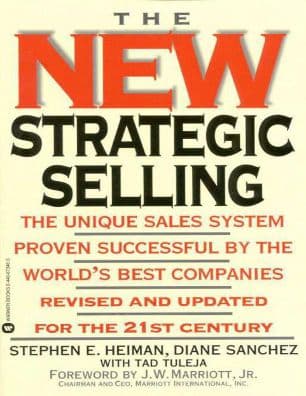
The New Strategic Selling by Robert B. Miller
The New Strategic Selling presents a structured approach to winning complex B2B sales by replacing guesswork with a repeatable strategic process. Robert B. Miller, Stephen E. Heiman, and Tad Tuleja show sales professionals how to identify the real decision-makers, understand each buyer's priorities, uncover potential obstacles, position their offering for a win-win outcome, and manage complex opportunities from strategy through execution.
📖 Overview
Selling to a large organization is rarely a simple conversation between one salesperson and one buyer.
There may be executives.
Users.
Technical specialists.
Finance teams.
Procurement.
Influencers.
And people who can quietly kill the deal.
This is what makes complex selling fundamentally different from ordinary transactions.
The New Strategic Selling provides a framework for navigating this complexity.
Originally developed from the Miller Heiman methodology, the book treats selling as a strategic process and emphasizes the idea of a win-win rather than manipulative closing tactics. The revised edition adds updated examples, competitive strategies, and practical guidance drawn from Miller Heiman's sales workshops.
The central idea is straightforward:
Don't manage a complex sale based on intuition alone. Map the opportunity strategically.
🎯 Why This Book Is Worth Reading
A salesperson can have a great relationship with one person and still lose the deal.
Why?
Because that person might not control the decision.
Someone else may control the budget.
Another person may use the product.
A technical stakeholder may reject it.
And an internal competitor may actively work against the proposal.
That's why complex selling requires more than persuasion.
It requires visibility.
You need to understand:
- Who matters?
- What does each person want?
- What does each person fear?
- Who supports you?
- Who opposes you?
- Who controls the economic decision?
- What does winning look like for each stakeholder?
- What could cause the deal to fail?
The book turns these questions into a systematic selling process.
👥 Who Should Read This Book
- B2B sales professionals
- Enterprise salespeople
- Account executives
- Sales managers
- Sales leaders
- Consultants
- SaaS sales teams
- Enterprise account managers
- Entrepreneurs selling to corporations
- Anyone handling complex, multi-stakeholder deals
🧠 Key Concepts
- Strategic Selling
- Win-Win
- Complex Sales
- Buying Influences
- Economic Buying Influence
- User Buying Influence
- Technical Buying Influence
- Coach
- Red Flags
- Response Modes
- Win-Results
- Single Sales Objective
- Competition
- Positioning
- Sales Funnel
- Strategic Action Plan
💡 In-Depth Discussion
1. Strategy Comes Before Tactics
Salespeople often jump directly into tactics:
Send an email.
Make a call.
Schedule a demo.
Send a proposal.
Follow up.
But tactics don't solve a bad strategy.
Before deciding what to do, you need to understand the opportunity.
A strategic salesperson first asks:
"What exactly are we trying to accomplish in this account?"
Then determines how to get there.
This distinction between strategy and tactics is one of the foundations of the Strategic Selling framework.
2. Understand the Complexity of the Sale
A complex sale is one where multiple people must provide input or approval before the purchase can happen.
That means the salesperson isn't really selling to one person.
They're navigating a buying organization.
Different stakeholders can have completely different motivations.
For example:
CFO
→ Wants financial return and risk control.
Operations Manager
→ Wants efficiency.
End User
→ Wants something easy to use.
IT
→ Wants security and compatibility.
Executive
→ Wants strategic impact.
One product.
Five different definitions of value.
3. Identify the Four Buying Influences
One of the most useful ideas in the book is identifying the different types of buying influence involved in a complex sale.
Economic Buying Influence
This person has significant influence over the financial decision.
Their question is:
"Is this worth the investment?"
User Buying Influence
These are the people who will actually use the solution.
Their question is:
"Will this make my work better?"
Technical Buying Influence
This stakeholder evaluates whether the solution meets technical or organizational requirements.
Their question is:
"Does this solution meet our requirements?"
Coach
The coach is someone inside the organization who helps you understand how the buying process actually works.
They can provide information you wouldn't otherwise have access to.
The important lesson is that identifying one friendly contact isn't enough.
You need to understand the entire buying landscape.
4. Find the Real Decision-Makers
A common mistake in enterprise sales is confusing a contact with a decision-maker.
Someone may love your solution.
They may attend every meeting.
They may tell you:
"I think this is exactly what we need."
And you can still lose.
Why?
Because they may not have enough influence to make the deal happen.
That's why strategic selling requires mapping the actual buying organization.
Ask:
- Who controls the budget?
- Who will use the solution?
- Who can approve it?
- Who can block it?
- Who influences the decision?
- Who understands the internal politics?
The objective isn't to collect contacts.
It's to understand influence.
5. Understand Each Buyer's Win-Result
Different stakeholders define success differently.
For one buyer, success might mean:
Lower costs.
For another:
Higher productivity.
For another:
Less risk.
For another:
Career advancement.
The salesperson's job is to understand what each important stakeholder considers a successful outcome.
This is the concept of the Win-Result.
Once you understand it, your message can become much more relevant.
You're no longer saying:
"Here's why our product is great."
You're saying:
"Here's how this helps you achieve what you care about."
6. Watch for Red Flags
Complex deals rarely collapse without warning.
There are usually signals.
For example:
- A key stakeholder suddenly disappears.
- Meetings repeatedly get postponed.
- Procurement enters unexpectedly.
- Your champion stops responding.
- A competitor gains access to senior management.
- The buyer asks for pricing before discussing value.
- Your contact cannot explain the decision process.
These are red flags.
The important lesson is not to ignore them simply because the deal feels positive.
A salesperson should continuously ask:
"What could cause this opportunity to fail?"
That question creates strategic awareness.
7. Build a Win-Win Position
Strategic Selling rejects the idea that successful selling requires manipulating the buyer.
Instead, the goal is to create an outcome where both sides have a reason to move forward.
The buyer gets meaningful business value.
The seller gets a valuable business relationship.
This changes the salesperson's mindset.
Instead of:
"How do I convince them to buy?"
Think:
"How can we create an outcome that makes sense for both sides?"
The original Strategic Selling methodology became particularly known for introducing this win-win approach.
8. Don't Ignore the Competition
Competition isn't always another company.
Sometimes the biggest competitor is:
Doing nothing.
A buyer may decide to keep the current system.
Delay the project.
Build internally.
Choose another department's solution.
Or simply postpone the decision.
Therefore, competitive analysis should ask:
- Who else is competing?
- What does the buyer like about them?
- What advantages do we have?
- Where are we vulnerable?
- What happens if the customer chooses nobody?
Understanding the competition allows you to prepare rather than react.
9. Manage the Sale as a Strategic Process
A complex deal shouldn't exist only inside the salesperson's head.
You need a structured view of:
- Current position
- Stakeholders
- Buying influences
- Desired outcomes
- Competitive position
- Risks
- Next actions
- Overall strategy
This is where the famous Blue Sheet methodology associated with Miller Heiman becomes useful: a structured way to map the opportunity and think through the critical elements of the sale.
The broader philosophy is simple:
If you cannot clearly see the deal, you cannot strategically manage the deal.
🛠 How to Apply the Ideas
Use this simplified Strategic Deal Map for every major opportunity.
Step 1 — Define the Opportunity
Write down:
What exactly are we trying to win?
Be specific.
Not:
"Win the account."
Instead:
"Secure the company's CRM implementation contract for the regional sales division."
Step 2 — Map the Buying Influences
List:
- Economic buyer
- Users
- Technical stakeholders
- Internal coach
- Potential blockers
Don't assume you know everything.
Mark unknowns clearly.
Step 3 — Identify Each Person's Win-Result
For every major stakeholder, ask:
"What does winning look like for this person?"
Record the answer.
Step 4 — Identify Red Flags
Ask:
"What could make us lose this deal?"
List every realistic risk.
Then determine how you will address it.
Step 5 — Evaluate the Competition
Ask:
- Who are we competing against?
- What does the customer like about them?
- What is our advantage?
- What is our weakness?
- Is doing nothing a realistic alternative?
Step 6 — Define Your Single Sales Objective
Every interaction should have a purpose.
Don't simply:
"Check in."
Instead:
"Confirm the technical requirements with the IT lead."
Or:
"Gain access to the CFO."
A clear objective makes every sales action more strategic.
Step 7 — Update the Strategy
Complex deals change.
People change positions.
Priorities change.
Competitors appear.
Budgets disappear.
Therefore, your sales strategy should evolve with the opportunity.
Strategic selling isn't a one-time exercise.
It's an ongoing process.
🌟 IslandHub Insight
The biggest lesson from The New Strategic Selling is:
A complex sale is not won by talking to more people. It's won by understanding the right people.
You can have:
- The best product.
- The lowest price.
- A great presentation.
- A strong relationship.
And still lose.
Because you didn't understand the buying organization.
Enterprise selling is ultimately a game of information, influence, and strategy.
Know who matters.
Know what they want.
Know who can stop the deal.
Know what could go wrong.
And know exactly what you need to accomplish next.
Don't just manage your pipeline.
Understand the strategy behind every opportunity.
📚 Related Books
- Solution Selling — Michael T. Bosworth
- Selling to Big Companies — Jill Konrath
- SPIN Selling — Neil Rackham
- The Ultimate Sales Machine — Chet Holmes
- Sell or Be Sold — Grant Cardone
- Secrets of Closing the Sale — Zig Ziglar
❓ Questions to Reflect On
- Who are the real buying influences in your biggest opportunity?
- Who controls the economic decision?
- What does winning look like for each important stakeholder?
- Who inside the account is genuinely helping you?
- What red flags are you currently ignoring?
- What is your biggest competitive vulnerability?
- What happens if the customer decides to do nothing?
- What is the single most important objective for your next interaction?
- Are you managing the deal strategically or simply reacting to events?
- Is your proposed outcome genuinely a win for both sides?
📖 References
- Miller, R. B., Heiman, S. E., & Tuleja, T. The New Strategic Selling: The Unique Sales System Proven Successful by the World's Best Companies. Grand Central Publishing.
- Miller Heiman / Kogan Page, The New Strategic Selling, 3rd edition.
Continue Learning
Deepen your understanding with related content

Ekonomi Indonesia 2026: Mengapa Rupiah "Tumbang" Saat Pertumbuhan Tetap Solid?
Noah Walker

Rahasia Metabolisme: Mengapa Gaya Hidup Modern Diam-Diam Menghambat Tujuan Sehat Anda?
Noah Walker

Paradoks Listrik 2026: Antara Jebakan Inflasi 4,76% dan Ambisi Kedaulatan Energi di Selat Hormuz
Noah Walker

Subsidi BBM 2026: Beban Rp210T di APBN demi Harga BBM Stabil
Noah Walker
Apply What You Learned
Try these tools to put your knowledge into practice
Explore Similar
Readers also explored these resources
Solution Selling : Creating Buyers in Difficult Selling Markets by Bosworth, Michael T
Books
Selling To Big Companies by Jill Konrath
Noah Walker
The Spin Selling Fieldbook: Practical Tools, Methods, Exercises And Resources by Neil Rackham
Noah Walker
The Psychology of Selling by Brian Tracy
Noah Walker
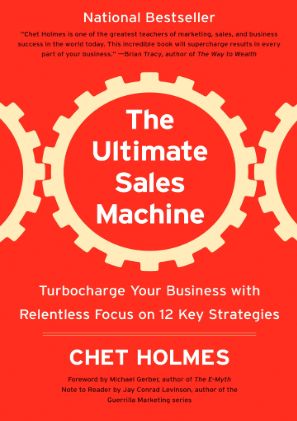
The Ultimate Sales Machine by Chet Holmes
Noah Walker
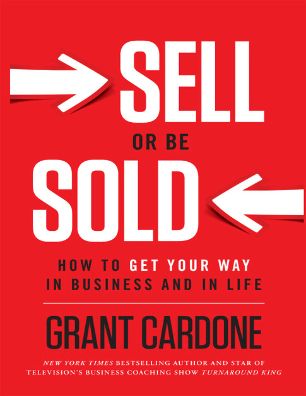
Sell Or Be Sold by Grant Cardone
Noah Walker
Continue Exploring IslandHub
Discover more from across the platform