Books
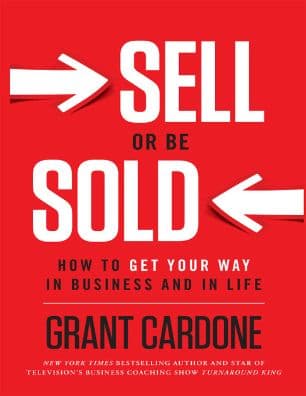
Sell Or Be Sold by Grant Cardone
Sell or Be Sold presents Grant Cardone’s approach to selling as a fundamental skill that extends far beyond traditional sales roles. The book explores persuasion, confidence, handling objections, understanding customers, and closing deals while arguing that success often depends on your ability to communicate value and gain commitment from others. It offers practical techniques for becoming more intentional, persistent, and effective in everyday selling situations.
📖 Overview
Whether you are selling a product, pitching an idea, negotiating an opportunity, or convincing someone to support your plan, Grant Cardone argues that you are participating in some form of selling.
In Sell or Be Sold, Cardone presents selling not merely as a profession but as a fundamental communication skill.
The book covers the entire sales process—from developing confidence in what you sell and understanding prospects to handling objections, following up, negotiating, and ultimately asking for the sale.
At the center of Cardone's philosophy is a simple idea:
Before you can convince someone else, you must first be convinced yourself.
🎯 Why This Book Is Worth Reading
Many people associate selling with scripts, pressure, or convincing people to buy things they don't need.
Sell or Be Sold approaches the subject more broadly.
Cardone argues that selling happens whenever one person attempts to gain another person's agreement.
An entrepreneur sells a vision to investors.
An employee sells an idea to a manager.
A freelancer sells expertise to a client.
A company sells the value of its product to customers.
Understanding sales therefore means understanding how people evaluate value, make decisions, raise objections, and eventually commit.
👥 Who Should Read This Book
- Sales professionals
- Entrepreneurs and business owners
- Freelancers and consultants
- Marketers
- People working in customer-facing roles
- Anyone interested in persuasion and negotiation
🧠 Key Concepts
- Selling
- Persuasion
- Product Conviction
- Customer Understanding
- Value Communication
- Objection Handling
- Closing
- Follow-Up
- Persistence
- Negotiation
💡 In-Depth Discussion
1. Selling Is Everywhere
One of Cardone's central arguments is that selling isn't limited to professional salespeople.
People constantly attempt to influence decisions.
You might need someone to accept your idea, attend an event, join your company, choose your service, or support a project.
Seen from this perspective, selling becomes less about transactions and more about gaining agreement.
The better you become at communicating value, the more effectively you can navigate these situations.
2. Become Sold on What You Sell
Cardone places considerable emphasis on conviction.
If you don't genuinely believe that your product, service, or idea provides value, communicating confidently becomes difficult.
Customers can often detect uncertainty.
This means effective selling begins before the sales conversation.
You need to understand:
What problem does this solve?
Why does it matter?
Who benefits from it?
Why should someone choose this solution?
Confidence becomes stronger when it is supported by genuine understanding.
3. Understand the Customer Before Selling
Selling isn't only about explaining features.
A feature becomes valuable only when it connects to something the customer actually wants.
For example:
A customer may not care that software contains an advanced automation system.
They may care that it saves five hours every week.
The effective salesperson translates:
Feature → Benefit → Customer Outcome
This shifts the conversation from what the product has to what the customer gets.
4. Objections Are Part of the Process
Price.
Timing.
Trust.
Competition.
Uncertainty.
These are normal parts of selling.
Rather than automatically interpreting objections as rejection, Cardone encourages salespeople to understand what is actually preventing the prospect from moving forward.
Sometimes the stated objection isn't the real concern.
A customer saying:
“It's too expensive.”
might actually mean:
“I don't understand why this is worth the price.”
The salesperson's job is therefore not merely to counter objections but to discover what uncertainty remains unresolved.
5. Follow-Up Matters
Many sales opportunities don't close during the first interaction.
Prospects become busy.
Priorities change.
Decisions get delayed.
People forget.
Cardone strongly emphasizes persistence and consistent follow-up.
The important distinction, however, is between useful persistence and annoying repetition.
Good follow-up should create additional value, clarify unanswered questions, or help the customer make a decision—not simply repeat “Are you ready to buy?”
6. Ask for the Sale
A sales conversation eventually requires a decision.
Many inexperienced sellers explain the product well but hesitate when it is time to ask the customer to commit.
Closing doesn't have to mean aggressive pressure.
It can simply mean clearly moving the conversation toward a decision:
“Would you like to move forward?”
Without that step, even an excellent presentation can remain only a conversation.
🛠 How to Apply the Ideas
Before your next sales conversation, create a simple Value Map.
Write down:
Customer problem → Product solution → Specific benefit → Desired outcome
For example:
Customer problem: Spending too much time manually creating reports.
Product solution: Automated reporting software.
Specific benefit: Reports are generated automatically.
Desired outcome: Several hours saved every week.
Then prepare answers to the three objections you hear most frequently.
This forces you to understand the sale from the customer's perspective rather than relying on a generic pitch.
🌟 IslandHub Insight
One of the most useful lessons from Sell or Be Sold is that selling becomes easier when you stop thinking:
“How do I convince this person?”
and start thinking:
“How do I make the value obvious?”
That distinction matters.
Persuasion without value can become manipulation.
Value without communication can remain invisible.
Good selling connects the two.
A strong salesperson understands the customer's situation, identifies whether the product genuinely fits, communicates the relevant value clearly, resolves uncertainty, and makes it easy for the customer to decide.
In that sense, the goal isn't simply to become better at talking.
It's to become better at understanding, communicating, and creating value.
📚 Related Books
- To Sell Is Human — Daniel H. Pink
- Influence — Robert B. Cialdini
- SPIN Selling — Neil Rackham
- The Psychology of Selling — Brian Tracy
- Never Split the Difference — Chris Voss
❓ Questions to Reflect On
- Can you clearly explain why someone should care about what you're selling?
- Which objection do you encounter most often, and what might actually be behind it?
- Are you communicating product features, or translating them into outcomes customers value?
📖 References
- Cardone, G. Sell or Be Sold: How to Get Your Way in Business and in Life.
- Pink, D. H. To Sell Is Human.
- Cialdini, R. B. Influence.
- Rackham, N. SPIN Selling.
- Voss, C. Never Split the Difference.
Continue Learning
Deepen your understanding with related content

Ekonomi Indonesia 2026: Mengapa Rupiah "Tumbang" Saat Pertumbuhan Tetap Solid?
Noah Walker

Rahasia Metabolisme: Mengapa Gaya Hidup Modern Diam-Diam Menghambat Tujuan Sehat Anda?
Noah Walker

Paradoks Listrik 2026: Antara Jebakan Inflasi 4,76% dan Ambisi Kedaulatan Energi di Selat Hormuz
Noah Walker

Subsidi BBM 2026: Beban Rp210T di APBN demi Harga BBM Stabil
Noah Walker
Apply What You Learned
Try these tools to put your knowledge into practice
Explore Similar
Readers also explored these resources
The Psychology of Selling by Brian Tracy
Noah Walker
The New Strategic Selling by Robert B. Miller
Noah Walker
Solution Selling : Creating Buyers in Difficult Selling Markets by Bosworth, Michael T
Books
Selling To Big Companies by Jill Konrath
Noah Walker

Secrets Of Closing The Sale by Zig Ziglar
Noah Walker
The Spin Selling Fieldbook: Practical Tools, Methods, Exercises And Resources by Neil Rackham
Noah Walker
Continue Exploring IslandHub
Discover more from across the platform