Books
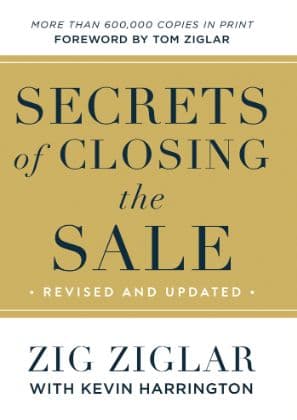
Secrets Of Closing The Sale by Zig Ziglar
Secrets of Closing the Sale explores the principles and techniques behind effective, ethical closing. Drawing on real-world examples and practical sales situations, Zig Ziglar explains how to build trust, communicate value, overcome objections, handle difficult prospects, and guide customers toward confident decisions. The book emphasizes that successful closing is not about pressure, but about understanding people, solving problems, and creating genuine value.
📖 Overview
Closing is often considered the most difficult part of selling.
You've identified the prospect.
You've presented the product.
You've answered questions.
But then comes the moment when the customer has to make a decision.
“So, are you ready to move forward?”
In Secrets of Closing the Sale, Zig Ziglar explores what actually happens between presenting an offer and earning a customer's commitment.
Rather than treating closing as a collection of pressure tactics, Ziglar presents it as the natural result of building trust, understanding needs, communicating value, and helping people make decisions.
The book combines sales principles, real-life stories, persuasion techniques, and practical closing approaches that can be applied across different selling situations.
🎯 Why This Book Is Worth Reading
Many people struggle with closing because they think closing begins at the end of the sales conversation.
Ziglar takes a broader view.
A successful close is often determined by everything that happens before the closing question.
If the salesperson understands the prospect's needs, establishes credibility, communicates value clearly, and handles concerns effectively, the final decision becomes much easier.
The key lesson is:
Don't pressure people into buying. Help them become comfortable with the decision.
👥 Who Should Read This Book
- Sales professionals
- Entrepreneurs
- Business owners
- Account executives
- Sales managers
- Freelancers and consultants
- Anyone who wants to improve persuasion and communication
🧠 Key Concepts
- Closing
- Persuasion
- Trust Building
- Objection Handling
- Customer Needs
- Value Communication
- Sales Psychology
- Buying Decisions
- Sales Questions
- Follow-Up
- Ethical Selling
- Confidence
💡 In-Depth Discussion
1. Closing Starts Before the Close
One of the biggest mistakes in selling is treating closing as a final event.
A salesperson spends most of the conversation talking about the product and suddenly expects the customer to buy.
But the customer's decision has usually been developing throughout the entire conversation.
Every interaction contributes to the final decision:
Trust → Understanding → Value → Confidence → Commitment
If one of those elements is missing, the close becomes harder.
2. Build Trust Before Asking for Commitment
People are unlikely to make important purchasing decisions with someone they don't trust.
Trust can come from many things:
- Listening carefully
- Understanding the customer's situation
- Being honest about limitations
- Demonstrating expertise
- Following through on promises
- Putting the customer's interests first
This is particularly important when the product is expensive or the decision carries significant risk.
The salesperson isn't simply selling a product.
They're asking the customer to trust their recommendation.
3. Understand the Customer's Real Need
Customers don't always communicate their deepest motivation directly.
Someone might say:
“I need a cheaper solution.”
But the real concern could be:
“I'm worried about making the wrong decision.”
Or:
“I need to justify this purchase to my manager.”
Effective selling requires discovering what is actually driving the decision.
This means listening beyond the words.
Ask questions.
Clarify.
Pay attention to concerns.
Then connect the solution to what genuinely matters to the customer.
4. Communicate Value, Not Just Features
A product can have dozens of impressive features.
But customers don't buy features simply because they exist.
They buy outcomes.
Consider a productivity tool with automated reporting.
Feature:
“Automated weekly reports.”
Value:
“Your team no longer needs to spend three hours every Friday preparing reports.”
The second statement makes the benefit tangible.
Good closing therefore depends on making the connection between:
Feature → Benefit → Customer Outcome
5. Objections Are Opportunities to Understand
“It's too expensive.”
“I need to think about it.”
“I need to talk to my partner.”
“Send me some information first.”
These statements can sound like rejection.
But they can also reveal uncertainty.
The salesperson's first response shouldn't necessarily be to argue.
Instead, investigate.
For example:
“What specifically would you like to think about?”
This creates an opportunity to discover what's actually holding the customer back.
Once the real concern is understood, the salesperson can determine whether it can genuinely be resolved.
6. Closing Should Feel Natural
Aggressive closing techniques can create short-term pressure but damage trust.
Ziglar's approach emphasizes helping customers make a decision that makes sense for them.
A close can therefore be simple:
“Based on what we've discussed, does this seem like the right solution for you?”
Or:
“Would you like to move forward with this option?”
The objective isn't to force a yes.
It's to make the next step clear.
7. Confidence Matters
Customers can sense uncertainty.
If a salesperson doesn't believe in the value of their own recommendation, it becomes difficult for the customer to feel confident about buying.
This doesn't mean pretending to be confident.
Real confidence comes from preparation.
Know:
- Your product
- Your customer
- Your market
- Your competitors
- Your limitations
- The problems you solve
- The value you create
The more thoroughly you understand these things, the more naturally confidence appears in the conversation.
🛠 How to Apply the Ideas
Before your next sales conversation, prepare a simple Closing Map.
1. Customer Need
What problem are they trying to solve?
2. Desired Outcome
What would success look like for them?
3. Value
How does your solution help them achieve that outcome?
4. Likely Objection
What could prevent them from moving forward?
5. Closing Question
What simple question can help them make the next decision?
For example:
Need: Follow-up with leads is inconsistent.
Outcome: More leads receive timely responses.
Value: Automated follow-up reduces missed opportunities.
Objection: “I'm not sure automation will work for our team.”
Closing Question: “If we can demonstrate that the workflow fits your current process, would you feel comfortable moving forward?”
This makes closing a continuation of the conversation rather than a sudden attempt to force a decision.
🌟 IslandHub Insight
The most important lesson from Secrets of Closing the Sale is that closing isn't about getting people to say yes.
It's about helping the right customer feel confident enough to make a decision.
Think about the difference:
Pressure:
“Why haven't you bought yet?”
Better selling:
“What is still making you uncertain?”
The first tries to force movement.
The second tries to understand the obstacle.
That's why great closing is ultimately less about clever closing lines and more about everything that happens before them:
Understand the person. Understand the problem. Communicate the value. Resolve the uncertainty. Ask for the decision.
When those pieces are in place, closing becomes less of a technique and more of a natural next step.
📚 Related Books
- SPIN Selling — Neil Rackham
- The SPIN Selling Fieldbook — Neil Rackham
- The Ultimate Sales Machine — Chet Holmes
- Sell or Be Sold — Grant Cardone
- Influence — Robert B. Cialdini
❓ Questions to Reflect On
- Do you treat closing as the final step, or as something you build toward throughout the conversation?
- What is the most common objection you hear from prospects?
- Are you trying to overcome objections—or understand what is behind them?
- Can you clearly explain the outcome your product creates for the customer?
📖 References
- Ziglar, Z. Secrets of Closing the Sale.
- Rackham, N. SPIN Selling.
- Holmes, C. The Ultimate Sales Machine.
- Cardone, G. Sell or Be Sold.
- Cialdini, R. B. Influence.
Continue Learning
Deepen your understanding with related content

Ekonomi Indonesia 2026: Mengapa Rupiah "Tumbang" Saat Pertumbuhan Tetap Solid?
Noah Walker

Rahasia Metabolisme: Mengapa Gaya Hidup Modern Diam-Diam Menghambat Tujuan Sehat Anda?
Noah Walker

Paradoks Listrik 2026: Antara Jebakan Inflasi 4,76% dan Ambisi Kedaulatan Energi di Selat Hormuz
Noah Walker

Subsidi BBM 2026: Beban Rp210T di APBN demi Harga BBM Stabil
Noah Walker
Apply What You Learned
Try these tools to put your knowledge into practice
Explore Similar
Readers also explored these resources
Sell Or Be Sold by Grant Cardone
Noah Walker
The Psychology of Selling by Brian Tracy
Noah Walker
Gym Launch Secrets by Alex Hormozi
Noah Walker
The New Strategic Selling by Robert B. Miller
Noah Walker
Solution Selling : Creating Buyers in Difficult Selling Markets by Bosworth, Michael T
Books
Selling To Big Companies by Jill Konrath
Noah Walker
Continue Exploring IslandHub
Discover more from across the platform