Books
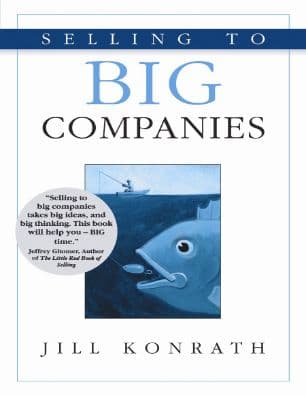
Selling To Big Companies by Jill Konrath
Selling to Big Companies is a practical guide to winning business from large corporate accounts. Jill Konrath explains how to identify the right companies and decision-makers, develop compelling value propositions, conduct effective account-entry campaigns, and turn initial conversations into productive sales opportunities. Rather than relying on endless cold calls or generic pitches, the book emphasizes relevance, preparation, persistence, and business-focused conversations.
📖 Overview
Selling to a large company is fundamentally different from selling to a small business.
There are more decision-makers.
More layers of approval.
More competition.
And usually, much less time to get someone's attention.
In Selling to Big Companies, Jill Konrath presents a practical system for getting through these barriers and creating conversations with corporate decision-makers.
Instead of trying to contact as many companies as possible, the book encourages salespeople to become much more selective.
Target the right accounts.
Understand their business.
Find the right people.
Give them a reason to talk to you.
The goal isn't simply to get a meeting.
It's to create enough relevance and value that the meeting becomes the beginning of a meaningful business conversation.
🎯 Why This Book Is Worth Reading
Many salespeople approach large companies with the same strategy they use everywhere else:
Send more emails.
Make more calls.
Leave more voicemails.
Follow up repeatedly.
Konrath argues that this approach often fails because corporate decision-makers are already overwhelmed with sales messages.
Your biggest competitor isn't necessarily another salesperson.
Sometimes it's simply the buyer's existing priorities and the status quo.
That's why successful enterprise selling requires a different approach: precision over volume and value over pitching.
👥 Who Should Read This Book
- B2B sales professionals
- Enterprise salespeople
- Account executives
- Sales development representatives
- Entrepreneurs selling to corporations
- Consultants
- Agency owners
- SaaS founders
- Business owners targeting larger clients
🧠 Key Concepts
- Target Account Selection
- Decision-Maker Identification
- Value Proposition
- Account-Entry Campaigns
- Business Research
- Sales Messaging
- Multi-Touch Outreach
- Gatekeeper Management
- Objection Handling
- Business Conversations
- Initial Sales Meetings
- Persistence
💡 In-Depth Discussion
1. Stop Treating Every Company as a Prospect
One of the biggest mistakes in B2B sales is trying to sell to everyone.
Large companies aren't homogeneous.
Different divisions have different problems.
Different departments have different priorities.
Different executives have different responsibilities.
Instead of targeting an entire corporation, narrow your focus to the specific part of the organization where your solution creates the most value.
The smaller your target becomes, the easier it becomes to understand it.
And the easier it becomes to create relevant messaging.
2. Target the Right Decision-Makers
Getting into a large company isn't enough.
You need to reach the people who influence or control the buying decision.
That means understanding:
- Who owns the problem?
- Who experiences the problem?
- Who controls the budget?
- Who influences the decision?
- Who ultimately approves the purchase?
Research should happen before outreach.
The objective isn't simply to find someone's email address.
It's to understand why that person would care about your solution.
3. Your Value Proposition Opens the Door
A corporate executive doesn't need another salesperson explaining what their company does.
They need a reason to pay attention.
That's why your value proposition should focus on business outcomes, not product features.
Instead of:
"We provide marketing automation software."
Think:
"We help B2B teams reduce manual lead follow-up and increase qualified opportunities."
The second statement immediately creates a business conversation.
A strong value proposition answers one question:
Why should this person care?
Konrath emphasizes developing messaging that differentiates you and communicates meaningful business value.
4. Research Before You Reach Out
Generic outreach sounds generic because it is generic.
If you haven't researched the company, your message will probably sound like it could have been sent to hundreds of other businesses.
Research can uncover:
- Recent company changes
- New leadership
- Expansion
- Strategic initiatives
- Operational challenges
- Industry pressures
- Business priorities
- Potential trigger events
These details give you something meaningful to talk about.
Research turns outreach from interruption into relevance.
5. Don't Make the First Conversation a Pitch
One of the most important principles is to stop thinking of the first interaction as a sales presentation.
The objective is to start a conversation.
Corporate decision-makers are busy.
They don't want to sit through a long explanation of your company.
Instead, lead with something relevant to their business.
Ask about their situation.
Explore the problem.
Understand the impact.
Then determine whether there is a genuine opportunity to help.
Conversation first. Pitch later.
6. Build an Account-Entry Campaign
A single phone call rarely breaks through a large organization.
That's why Konrath recommends a structured, multi-faceted approach to entering target accounts.
Your campaign might combine:
- Phone calls
- Voicemails
- Personalized emails
- Referrals
- Networking
- Research
- Direct outreach
- Follow-ups
Each interaction should add value rather than simply saying:
"Just following up."
The objective is to gradually build familiarity and credibility.
7. Turn Gatekeepers Into Allies
Salespeople sometimes treat assistants and gatekeepers as obstacles.
That's a mistake.
These people often understand the organization better than outsiders do.
They know:
- Who handles certain responsibilities
- How executives prefer to communicate
- What issues are currently important
- How the organization works
Treating them with respect can turn them from barriers into sources of information.
The goal isn't to manipulate your way past them.
It's to create a professional relationship.
8. Persistence Without Becoming Annoying
Enterprise sales can take time.
A lack of response doesn't necessarily mean:
"No."
It may simply mean:
"Not now."
But persistence only works when every touchpoint has a reason.
Instead of repeatedly asking:
"Have you had a chance to review my email?"
Bring something new.
Share an insight.
Mention a relevant development.
Offer a useful resource.
Ask a thoughtful question.
Persistence becomes much more effective when it creates value.
🛠 How to Apply the Ideas
Create a simple Target Account System.
Step 1 — Choose 10–25 high-value accounts
Don't start with hundreds.
Choose companies where your solution has a strong potential fit.
Step 2 — Research each account
Identify:
- Business priorities
- Potential problems
- Relevant departments
- Recent changes
- Key decision-makers
Step 3 — Create a personalized value proposition
Complete this sentence:
"We help [type of company/team] achieve [business outcome] by [unique approach]."
Step 4 — Build your account-entry campaign
Plan several touchpoints rather than relying on one cold call.
Step 5 — Start conversations
Don't immediately pitch.
Ask questions that reveal whether the problem actually exists.
Step 6 — Advance the opportunity
Every interaction should have a logical next step.
That might be:
- Another meeting
- A deeper discovery session
- Introducing another stakeholder
- Reviewing a solution
- Evaluating a business case
🌟 IslandHub Insight
The biggest lesson from Selling to Big Companies is simple:
Enterprise selling isn't a numbers game. It's a relevance game.
Calling 1,000 random companies might feel productive.
But deeply understanding 20 ideal accounts can be far more valuable.
When you understand the company, you understand the problem.
When you understand the problem, you can speak to the right person.
And when you speak to the right person with the right message, you no longer sound like another salesperson.
You sound like someone worth talking to.
Don't try to reach more people.
Try to become more relevant to the right people.
📚 Related Books
- SPIN Selling — Neil Rackham
- The Ultimate Sales Machine — Chet Holmes
- Sell or Be Sold — Grant Cardone
- Secrets of Closing the Sale — Zig Ziglar
- The Greatest Salesman in the World — Og Mandino
❓ Questions to Reflect On
- Are you targeting the right companies or simply the largest possible list?
- Who actually owns the problem you're trying to solve?
- Can you explain your value proposition without mentioning your product's features?
- What business issue would make your ideal customer want to talk to you?
- Does every follow-up you send provide a new reason to respond?
📖 References
- Konrath, J. Selling to Big Companies.
- Konrath, J. SNAP Selling.
- Rackham, N. SPIN Selling.
- Holmes, C. The Ultimate Sales Machine.
Continue Learning
Deepen your understanding with related content

Ekonomi Indonesia 2026: Mengapa Rupiah "Tumbang" Saat Pertumbuhan Tetap Solid?
Noah Walker

Rahasia Metabolisme: Mengapa Gaya Hidup Modern Diam-Diam Menghambat Tujuan Sehat Anda?
Noah Walker

Paradoks Listrik 2026: Antara Jebakan Inflasi 4,76% dan Ambisi Kedaulatan Energi di Selat Hormuz
Noah Walker

Subsidi BBM 2026: Beban Rp210T di APBN demi Harga BBM Stabil
Noah Walker
Apply What You Learned
Try these tools to put your knowledge into practice
Explore Similar
Readers also explored these resources
Solution Selling : Creating Buyers in Difficult Selling Markets by Bosworth, Michael T
Books
The New Strategic Selling by Robert B. Miller
Noah Walker
The Spin Selling Fieldbook: Practical Tools, Methods, Exercises And Resources by Neil Rackham
Noah Walker
The Psychology of Selling by Brian Tracy
Noah Walker
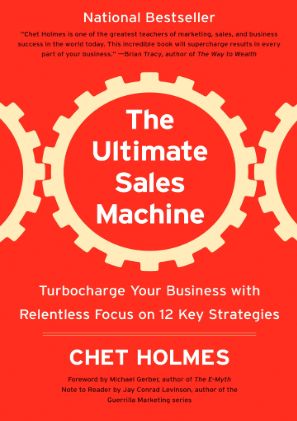
The Ultimate Sales Machine by Chet Holmes
Noah Walker
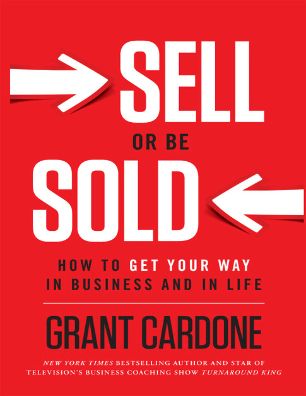
Sell Or Be Sold by Grant Cardone
Noah Walker
Continue Exploring IslandHub
Discover more from across the platform