Books
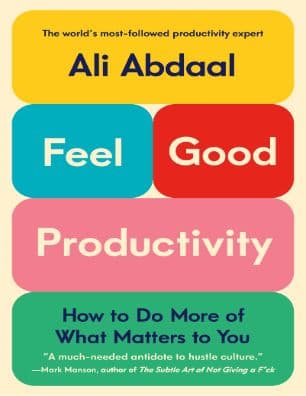
Feel - Good Productivity by Ali Abdaal
Feel-Good Productivity challenges the idea that achieving more requires working harder. Drawing on psychological research and practical experiments, Ali Abdaal argues that positive emotions can fuel sustainable productivity. Through the principles of Energize, Unblock, and Sustain, the book explores how play, confidence, motivation, rest, and personal meaning can help us accomplish meaningful work without making exhaustion the price of progress.
📖 Overview
What if the secret to productivity isn't discipline, longer working hours, or pushing yourself harder—but actually feeling good while doing the work?
In Feel-Good Productivity, Ali Abdaal challenges the traditional idea that productivity must involve struggle and sacrifice. Drawing from psychological research, personal experiments, and his experiences as a doctor, entrepreneur, and creator, Abdaal argues that positive emotions aren't merely rewards we receive after becoming productive. They can actually be a source of productivity itself.
The book organizes this philosophy around three major stages: Energize, Unblock, and Sustain. Together, they provide a framework for making work more enjoyable, overcoming procrastination and internal barriers, and maintaining productivity without falling into chronic exhaustion or burnout.
🎯 Why This Book Is Worth Reading
Most productivity advice focuses on managing time.
Ali Abdaal focuses more deeply on managing energy and emotion.
This distinction matters because having two free hours doesn't automatically mean we have two productive hours. Motivation, mood, confidence, curiosity, stress, and energy all influence what we're capable of doing during that time.
Feel-Good Productivity is therefore useful for anyone who has tried productivity systems but still struggles with procrastination, low motivation, or exhaustion.
Instead of asking only:
“How can I do more?”
the book encourages another question:
“How can I make doing this feel better?”
👥 Who Should Read This Book
- Students struggling with motivation or procrastination
- Professionals trying to work more sustainably
- Creators and entrepreneurs
- People interested in productivity systems
- Readers interested in behavioral psychology
- Anyone experiencing an unhealthy relationship with productivity
- People who want to accomplish meaningful goals without constantly relying on willpower
🧠 Key Concepts
- Feel-Good Productivity
- Positive Emotions
- Play
- Power
- People
- Procrastination
- Motivation
- Confidence
- Energy Management
- Burnout Prevention
- Rest and Recovery
- Sustainable Productivity
💡 In-Depth Discussion
1. Productivity Can Begin With Feeling Good
The central argument of the book reverses a common assumption.
We often think:
Productivity → Achievement → Feeling Good
Abdaal suggests another possibility:
Feeling Good → Energy → Productivity → Achievement
Positive emotions can make us more curious, creative, resilient, and willing to act.
Instead of treating happiness as something we earn after completing our work, we can intentionally introduce positive emotions into the process itself.
2. Energize: Make Work Feel Better
The first part of Abdaal's framework focuses on generating energy through three ideas:
Play, Power, and People.
Play means approaching tasks with curiosity, experimentation, and less unnecessary seriousness.
Power involves developing a sense of control and confidence in our ability to handle challenges.
People emphasizes the motivational power of social connection.
Together, these factors can transform work from something we constantly force ourselves to do into something easier to engage with.
3. Unblock: Understand Why You Procrastinate
Procrastination isn't always simply a lack of discipline.
Sometimes we avoid tasks because they feel:
- confusing,
- overwhelming,
- unpleasant,
- meaningless,
- or emotionally uncomfortable.
Rather than immediately blaming ourselves, Abdaal encourages investigating the emotional friction behind avoidance.
Once we identify what makes a task difficult to start, we can redesign either the task or our approach to it.
4. Reduce the Friction of Starting
Starting often requires more psychological energy than continuing.
A large goal such as:
“Write my thesis.”
can feel intimidating.
But:
“Open the document and write one paragraph.”
creates a much smaller psychological barrier.
Reducing the size of the first action makes starting easier, and starting can generate momentum.
5. Motivation Is Connected to Meaning
External rewards can motivate behavior, but they aren't always enough to sustain difficult work.
People are often more persistent when their actions connect with something personally meaningful.
That could include:
- curiosity,
- contribution,
- mastery,
- relationships,
- identity,
- or a larger purpose.
Understanding why something matters can therefore make consistent action easier.
6. Sustain: Productivity Requires Recovery
Doing more isn't useful if the system eventually collapses.
Abdaal therefore treats rest as part of productivity rather than its opposite.
Sustainable performance requires periods of recovery.
Rest, breaks, enjoyable activities, and disengaging from work can help restore the mental and emotional resources needed for future effort.
The objective isn't maximum output every day.
It is sustainable output over time.
🛠 How to Apply the Ideas
A useful exercise from the philosophy of Feel-Good Productivity is to examine a task you've been avoiding.
Instead of asking:
“Why am I so lazy?”
ask:
“What makes this task feel difficult?”
Then identify the source of friction.
Maybe the task is too large. Break it down.
Maybe it's boring. Introduce an element of play.
Maybe you're afraid of doing it badly. Lower the expectations for your first attempt.
Maybe you're exhausted. Recover first.
Maybe you don't understand why you're doing it. Reconnect the task with a meaningful goal.
The objective is to redesign the experience, rather than constantly increasing the amount of force you apply to yourself.
🌟 IslandHub Insight
One of the most useful distinctions in Feel-Good Productivity is between productive intensity and productive sustainability.
You can force yourself to study for twelve hours tomorrow.
The harder question is whether you can continue learning effectively for the next twelve months.
That changes how we think about productivity.
A system that generates impressive output for one week but leaves you exhausted afterward may be less productive than a lighter system you can maintain for years.
This principle becomes particularly powerful when combined with compounding:
Enjoyment → Consistency → Repetition → Improvement → Results
At IslandHub, this applies directly to learning.
The best learning system isn't necessarily the one that allows you to consume the most information today.
It's the one that makes you want to come back and learn again tomorrow.
📚 Related Books
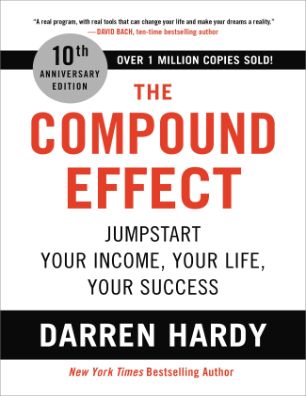
- The Compound Effect — Darren Hardy
- Atomic Habits — James Clear
- Essentialism — Greg McKeown
- Four Thousand Weeks — Oliver Burkeman
- Slow Productivity — Cal Newport
❓ Questions to Reflect On
- Which important activities in your life have become unnecessarily unpleasant?
- What could you change to make your work or learning process more enjoyable?
- Are you optimizing your productivity for maximum short-term output or long-term sustainability?
📖 References
- Abdaal, A. Feel-Good Productivity: How to Do More of What Matters to You.
- Clear, J. Atomic Habits.
- McKeown, G. Essentialism: The Disciplined Pursuit of Less.
- Newport, C. Slow Productivity.
- Burkeman, O. Four Thousand Weeks.
Continue Learning
Deepen your understanding with related content

Ekonomi Indonesia 2026: Mengapa Rupiah "Tumbang" Saat Pertumbuhan Tetap Solid?
Noah Walker

Rahasia Metabolisme: Mengapa Gaya Hidup Modern Diam-Diam Menghambat Tujuan Sehat Anda?
Noah Walker

Paradoks Listrik 2026: Antara Jebakan Inflasi 4,76% dan Ambisi Kedaulatan Energi di Selat Hormuz
Noah Walker

Subsidi BBM 2026: Beban Rp210T di APBN demi Harga BBM Stabil
Noah Walker
Apply What You Learned
Try these tools to put your knowledge into practice
Explore Similar
Readers also explored these resources
Continue Exploring IslandHub
Discover more from across the platform