Books
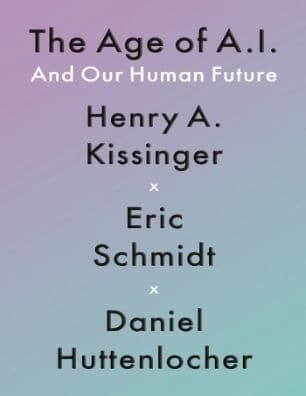
The Age Of Ai: And Our Human Future by Henry Kissinger
The Age of AI explores how artificial intelligence is reshaping knowledge, decision-making, work, and global power. Written by Henry Kissinger, Eric Schmidt, and Daniel Huttenlocher, the book examines the opportunities and ethical challenges of AI while asking one fundamental question: what does it mean to be human in the age of intelligent machines?
📖 Overview
Artificial intelligence is no longer a distant possibility—it is becoming one of the defining forces of the 21st century. In The Age of AI: And Our Human Future, Henry Kissinger, former Google CEO Eric Schmidt, and MIT professor Daniel Huttenlocher examine how AI is transforming not only industries but also the very foundations of human civilization.
Rather than focusing on algorithms or programming, the authors explore AI through the lenses of history, philosophy, politics, economics, and ethics. They argue that AI represents a technological shift comparable to the invention of the printing press or the Industrial Revolution, forcing humanity to reconsider concepts such as knowledge, creativity, authority, and even truth itself.
Instead of asking what AI can do, the book asks a more profound question: How should humanity adapt when machines begin to think, learn, and make decisions in ways that rival—or even surpass—our own?
🎯 Why This Book Is Worth Reading
Most books about artificial intelligence explain how AI works. This book explains why AI matters.
The authors move beyond technical discussions to explore AI's broader impact on society, government, business, warfare, education, and international relations. They encourage readers to think critically about the opportunities AI creates while remaining aware of its ethical and geopolitical consequences.
Whether you're a student, entrepreneur, policymaker, or simply curious about the future, this book provides a thoughtful framework for understanding one of the most transformative technologies of our time.
👥 Who Should Read This Book
- Students interested in artificial intelligence and emerging technologies
- Entrepreneurs and startup founders
- Business leaders navigating digital transformation
- Software engineers and AI practitioners
- Policymakers and public sector professionals
- Investors following technological trends
- Researchers in technology, ethics, or international relations
- Anyone curious about the future of humanity
🧠 Key Concepts
- Artificial Intelligence
- Human–AI Collaboration
- AI Ethics
- Decision Intelligence
- Geopolitics of AI
- Future of Work
- Knowledge and Creativity
- Autonomous Systems
- Digital Transformation
- Human Responsibility
💡 In-Depth Discussion
1. AI Is More Than Another Technology
The authors argue that AI should not be viewed as merely another digital innovation. Unlike previous technologies that extended human physical capabilities, AI extends cognitive capabilities—allowing machines to recognize patterns, generate knowledge, and make increasingly sophisticated decisions.
This shift fundamentally changes humanity's relationship with technology.
2. The Nature of Knowledge Is Changing
For centuries, human knowledge has been created through observation, reasoning, and scientific inquiry. AI introduces a new model in which machines can discover patterns too complex for humans to detect.
This raises an important question: Can we trust conclusions that even their creators cannot fully explain?
3. AI Will Redefine Work, Not Just Automate It
Automation is only the beginning.
The book argues that AI will reshape how organizations make decisions, collaborate, innovate, and compete. While repetitive tasks may disappear, new roles centered around creativity, strategy, ethics, and human judgment will become increasingly valuable.
The future belongs not to those who compete against AI, but to those who learn how to work alongside it.
4. Ethics Must Evolve Alongside Technology
As AI systems become involved in healthcare, finance, education, transportation, and military operations, ethical questions become unavoidable.
Who is responsible when an autonomous system makes a mistake?
How should fairness, transparency, and accountability be maintained when decisions are made by algorithms?
The authors argue that technological progress without ethical leadership creates significant societal risks.
5. AI Is Becoming a Geopolitical Force
Artificial intelligence is increasingly shaping global competition.
Countries investing heavily in AI gain advantages not only in economic productivity but also in cybersecurity, defense, scientific research, and political influence. As a result, AI has become a strategic resource comparable to energy or nuclear technology in previous generations.
Managing international cooperation while maintaining national security will be one of the defining challenges of the coming decades.
6. Humanity Must Define Its Own Role
Perhaps the book's most important message is that AI will not determine humanity's future—human choices will.
Technology can amplify both our strengths and our weaknesses. Whether AI becomes a force for prosperity or division depends on how governments, businesses, researchers, and citizens choose to develop and govern it.
🛠 How to Apply the Ideas
- Build AI literacy instead of fearing technological change.
- Use AI to enhance critical thinking rather than replace it.
- Develop uniquely human skills such as creativity, leadership, communication, and ethical reasoning.
- Stay informed about AI regulations and governance.
- Evaluate AI tools based on both effectiveness and ethical implications.
- Adopt a mindset of continuous learning as technology evolves.
🌟 IslandHub Insight
Many discussions about AI focus on whether machines will eventually surpass human intelligence. The Age of AI suggests that this may not be the most important question.
A more meaningful question is whether humans can evolve just as quickly as the technologies they create.
Throughout history, humanity has repeatedly adapted to revolutionary inventions—from writing and printing to electricity and the internet. AI may become the next great transformation, but its ultimate impact will depend less on technological capability than on human wisdom.
At IslandHub, we believe AI should not replace human thinking—it should elevate it. The future belongs to individuals who combine technological fluency with curiosity, ethical judgment, and lifelong learning.
📚 Related Books
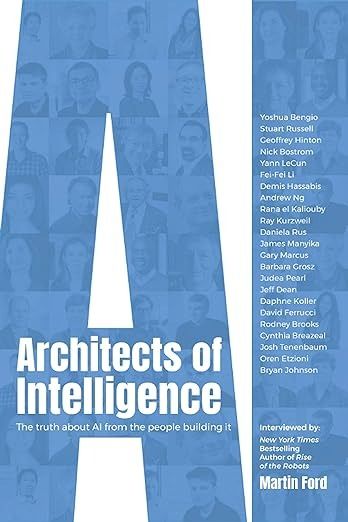
- Co-Intelligence — Ethan Mollick
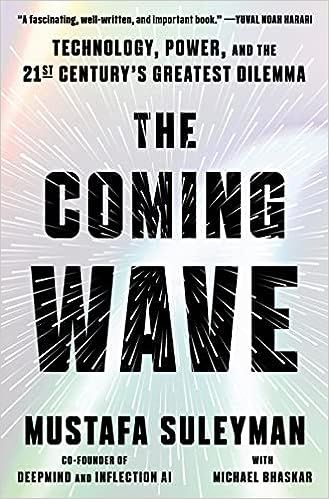
- The Coming Wave — Mustafa Suleyman & Michael Bhaskar
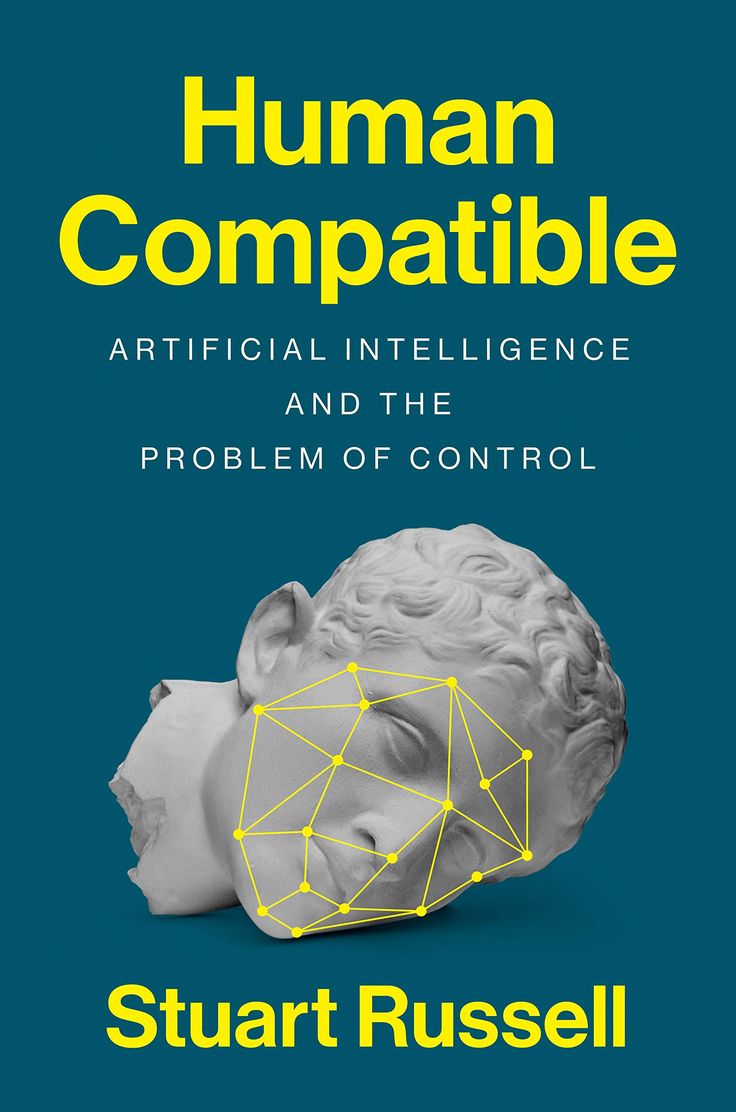
- Human Compatible — Stuart Russell
- Life 3.0 — Max Tegmark
- Superintelligence — Nick Bostrom
❓ Questions to Reflect On
- How should society balance AI innovation with ethical responsibility?
- Which uniquely human abilities will become more valuable in an AI-driven world?
- How can governments, businesses, and individuals ensure that AI benefits humanity rather than undermining it?
📖 References
- Kissinger, H. A., Schmidt, E., & Huttenlocher, D. (2021). The Age of AI: And Our Human Future. Little, Brown and Company.
- Russell, S. (2019). Human Compatible: Artificial Intelligence and the Problem of Control. Viking.
- Tegmark, M. (2017). Life 3.0: Being Human in the Age of Artificial Intelligence. Penguin Books.
Continue Learning
Deepen your understanding with related content

Oracle Layoffs 2026: Why a Tech Giant Is Cutting 30,000 Jobs to Bet on AI
Noah Walker

Ekonomi Indonesia 2026: Mengapa Rupiah "Tumbang" Saat Pertumbuhan Tetap Solid?
Noah Walker

Rahasia Metabolisme: Mengapa Gaya Hidup Modern Diam-Diam Menghambat Tujuan Sehat Anda?
Noah Walker

Paradoks Listrik 2026: Antara Jebakan Inflasi 4,76% dan Ambisi Kedaulatan Energi di Selat Hormuz
Noah Walker
Apply What You Learned
Try these tools to put your knowledge into practice
Explore Similar
Readers also explored these resources

Continue Exploring IslandHub
Discover more from across the platform