Books
Platform Revolution by Geoffrey G. Parker, Marshall W. Van Alstyne, and Sangeet Paul Choudary
FeaturedPlatform Revolution explains how digital platforms create value through network effects, transforming industries and reshaping the modern economy.
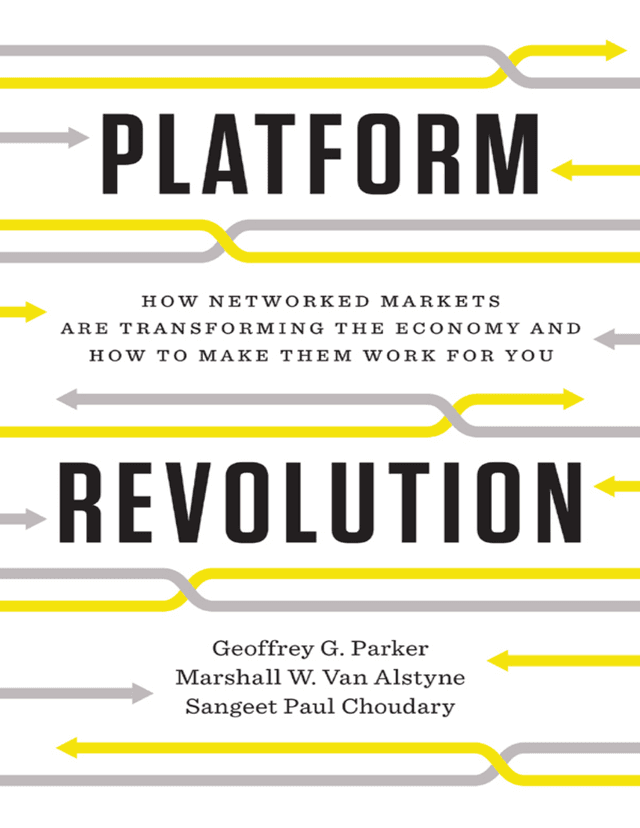
Platform Revolution: How Digital Platforms Are Transforming Business and the Economy
Over the past two decades, some of the world's most valuable companies have emerged without owning the traditional assets associated with their industries. Uber owns no taxis, Airbnb owns no hotels, and Facebook creates little of its own content. In Platform Revolution, Geoffrey G. Parker, Marshall W. Van Alstyne, and Sangeet Paul Choudary explain why platform-based businesses have become one of the most powerful economic models of the digital age.
The book argues that the modern economy is increasingly shifting from traditional pipeline businesses to platform businesses. Pipeline businesses create value through a linear process: producing products and delivering them to customers. Platforms, by contrast, create value by facilitating interactions between different groups of users, such as buyers and sellers, creators and consumers, or service providers and customers.
One of the book's central concepts is the network effect. As more users join a platform, the value of the platform increases for everyone involved. This creates a powerful growth mechanism that allows successful platforms to scale rapidly and dominate markets. Companies such as Amazon, Airbnb, Uber, and LinkedIn have leveraged network effects to build massive ecosystems that become increasingly difficult for competitors to replicate.
The authors also discuss how platforms reduce transaction costs, increase efficiency, and unlock new forms of innovation. By enabling participants to connect directly, platforms create opportunities that would be difficult or impossible within traditional business structures.
Another important lesson is that successful platform businesses focus less on controlling resources and more on facilitating valuable interactions. Rather than owning everything themselves, platform leaders design rules, incentives, and systems that encourage users to create value for one another.
The book further explores challenges such as governance, trust, quality control, regulation, and competition. As platforms grow, maintaining healthy interactions between users becomes just as important as attracting new participants. Poor governance can damage trust and weaken network effects, while effective governance strengthens the platform's long-term sustainability.
Beyond technology companies, the lessons from Platform Revolution apply to entrepreneurs, business leaders, policymakers, and innovators seeking to understand how digital transformation is reshaping industries. The rise of platforms is changing how products are distributed, how services are delivered, and how value is created across the global economy.
Ultimately, Platform Revolution demonstrates that platforms are not merely a new business model—they represent a fundamental shift in how organizations create, capture, and scale value in the digital era.
Continue Learning
Deepen your understanding with related content

Ekonomi Indonesia 2026: Mengapa Rupiah "Tumbang" Saat Pertumbuhan Tetap Solid?
Noah Walker

Rahasia Metabolisme: Mengapa Gaya Hidup Modern Diam-Diam Menghambat Tujuan Sehat Anda?
Noah Walker

Paradoks Listrik 2026: Antara Jebakan Inflasi 4,76% dan Ambisi Kedaulatan Energi di Selat Hormuz
Noah Walker

Subsidi BBM 2026: Beban Rp210T di APBN demi Harga BBM Stabil
Noah Walker
Apply What You Learned
Try these tools to put your knowledge into practice
Explore Similar
Readers also explored these resources



Continue Exploring IslandHub
Discover more from across the platform